


WSU researchers discover key mechanism behind sleep
Related images
(click to enlarge)
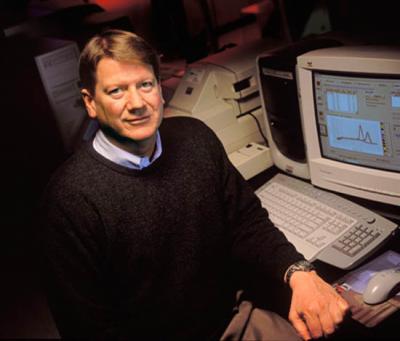
Washington State University researchers have discovered the mechanism by which the brain switches from a wakeful to a sleeping state. The finding clears the way for a suite of discoveries, from sleeping aids to treatments for stroke and other brain injuries. "We know that brain activity is linked to sleep, but we've never known how," said James Krueger, WSU neuroscientist and lead author of a paper in the latest Journal of Applied Physiology. "This gives us a mechanism to link brain activity to sleep. This has not been done before."
The mechanism—a cascade of chemical transmitters and proteins—opens the door to a more detailed understanding of the sleep process and possible targets for drugs and therapies aimed at the costly, debilitating and dangerous problems of fatigue and sleeplessness. Sleep disorders affect between 50 and 70 million Americans, according to the Institute of Medicine of the National Academies. The Institute also estimates the lost productivity and mishaps of fatigue cost businesses roughly $150 billion, while motor vehicle accidents involving tired drivers cost at least $48 billion a year.
The finding is one of the most significant in Krueger's 36-year career, which has focused on some of the most fundamental questions about sleep.
Even before the dawn of science, people have known that wakeful activity, from working to thinking to worrying, affects the sleep that follows. Research has also shown that, when an animal is active and awake, regulatory substances build up in the brain that induce sleep.
"But no one ever asked before: What is it in wakefulness that is driving these sleep regulatory substances?" said Krueger. "No one ever asked what it is that's initiating these sleep mechanisms. People have simply not asked the question."
The researchers documented how ATP (adenosine triphosphate), the fundamental energy currency of cells, is released by active brain cells to start the molecular events leading to sleep. The ATP then binds to a receptor responsible for cell processing and the release of cytokines, small signaling proteins involved in sleep regulation.
By charting the link between ATP and the sleep regulatory substances, the researchers have found the way in which the brain keeps track of activity and ultimately switches from a wakeful to sleeping state. For example, learning and memory depend on changing the connections between brain cells. The study shows that ATP is the signal behind those changes.
The finding reinforces a view developed by Krueger and his colleagues that sleep is a "local phenomenon, that bits and pieces of the brain sleep" depending on how they've been used.
The link between sleep, brain cell activity and ATP has many practical consequences, Krueger said.
For example:
- The study provides a new set of targets for potential medications. Drugs designed to interact with the receptors ATP binds to may prove useful as sleeping pills.
- Sleep disorders like insomnia can be viewed as being caused by some parts of the brain being awake while other parts are asleep, giving rise to new therapies.
- ATP-related blood flow observed in brain-imaging studies can be linked to activity and sleep.
- Researchers can develop strategies by which specific brain cell circuits are oriented to specific tasks, slowing fatigue by allowing the used parts of the brain to sleep while one goes about other business. It may also clear the way for stroke victims to put undamaged regions of their brains to better use.
- Brain cells cultured outside the body can be used to study brain cell network oscillations between sleep-like and wake-like states, speeding the progress of brain studies.
Source: Washington State University
Other sources
- WSU researchers discover key mechanism behind sleepfrom Biology News Net14 years ago
- Researchers discover key mechanism behind sleepfrom Physorg14 years ago
- WSU researchers discover key mechanism behind sleepfrom Science Blog14 years ago

