


Einstein researchers identify potential target for metastatic cancer
Related images
(click to enlarge)
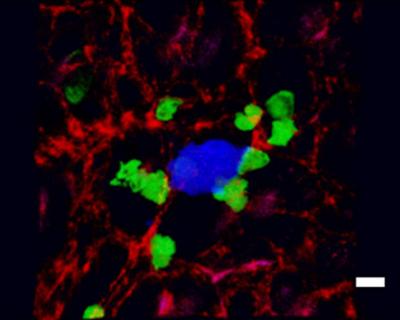
The deadliest part of the cancer process, metastasis, appears to rely on help from macrophages, potent immune system cells that usually defend vigorously against disease, researchers at Albert Einstein College of Medicine of Yeshiva University report. In a new study published online in PLoS ONE, Einstein cancer research specialist Jeffrey W. Pollard, Ph.D., and seven colleagues analyzed the movement of breast cancer cells in mice to show that a distinct population of macrophages helps malignant cells set up shop at distant sites. This process, known as metastasis, is the main reason cancer patients die.
Dr. Pollard and his colleagues propose that their discovery offers a potentially useful new target for anti-cancer therapy. What they've found is a vulnerable step in the cancer process that might be blocked by drug treatments. In three different ways, the scientists showed that metastatic tumor growth is inhibited if these unusual macrophages are killed.
They also showed that even after breast cancer cells have lodged in the animals' lungs and started aggressive growth, erasing the special macrophages dramatically slowed growth of the metastasized tumors. "This suggests that anti-macrophage therapy will have an impact in patients even with metastatic disease," Dr. Pollard said.
Based on this new work, he added, "macrophages themselves, or their unique signaling pathways, represent new therapeutic targets that may be efficacious in reducing cancer mortality."
Ordinarily, macrophages are vital for maintaining health as an integral arm of the immune system, one of the body's main lines of defense. Their assigned tasks include cleaning up debris in the wake of disease or injury, alerting other immune system cells when an infection begins, and helping identify viruses and bacteria that need to be killed.
The findings of this study build on earlier cancer research by Dr. Pollard and his team that shows macrophages can act at the primary tumor site to enhance tumor progression and malignancy. Thus, they've now shown that macrophages can become traitors, enhancing the worst aspect of the disease – metastatic tumor growth.
"This new study is important because it definitively shows the effects of macrophages at distant sites, as well as the identity of the macrophage population," Dr. Pollard explained. "This is the first proof that they have impact at this location, at the site of metastatic tumor growth."
Dr. Pollard noted that "metastatic disease is the major cause of cancer mortality," in part because the distant tumors tend to resist chemotherapy and radiation treatments. Unfortunately, "the biological mechanisms that underlie metastatic disease are poorly understood," so continuing research is needed. And if metastasis can somehow be blocked -- particularly through influencing cells of the metastatic microenvironment -- the impact on cancer mortality would be enormous.
Source: Albert Einstein College of Medicine
Other sources
- Potential metastatic cancer targets foundfrom UPITue, 11 Aug 2009, 19:49:19 UTC
- Researchers identify potential target for metastatic cancerfrom PhysorgMon, 10 Aug 2009, 23:35:27 UTC
- Einstein researchers identify potential target for metastatic cancerfrom Science BlogMon, 10 Aug 2009, 21:42:42 UTC