


Tales of the 'Trojan horse drug' and the 'miracle dogs'
Related images
(click to enlarge)
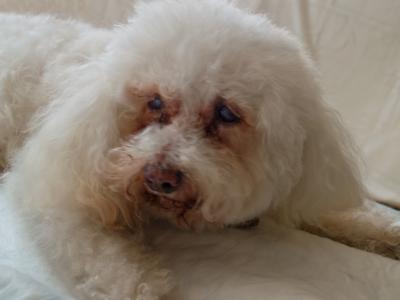
Diagnosed with an extremely aggressive form of cancer called anal sac adenocarcinoma, Oscar's future seemed bleak. Bedridden and unresponsive to chemotherapy or radiation, he would be lucky to survive three months. But thanks to an innovative new drug treatment, Oscar's cancer receded and he was walking again within two weeks. Oscar's recovery was extraordinary enough, but his case was unusual for another reason. Oscar is a Bichon Frise, who scientists reporting here today at the 237th National Meeting of the American Chemical Society call "the Miracle Dog." Joseph A. Bauer, Ph.D., and colleagues described promising results with a drug called nitrosylcobalamin (NO-Cbl) in battling cancer in Oscar and three other canines without any negative side effects. While it gives profound hope to dog owners, NO-Cbl also points to a powerful new cancer treatment for humans — one that infiltrates cancer cells like a biological Trojan horse.
"We are one of the few research groups that is offering to treat dogs with cancer that otherwise have no hope," Bauer said. "With no other options available, most people in this situation opt to euthanize so that their pets don't go through the pain of disease and trauma of surgery."
About six million dogs are diagnosed with cancer each year in the United States. According to the National Cancer Institute (NCI), pets with cancer provide a win-win opportunity for cancer researchers. Scientists can study new cancer treatments in animals other than lab mice. And pets get access to new treatments that provide hope and in instances like NO-Cbl, additional time.
Bauer put it this way: "The beauty of using a dog or a cat to test a cancer drug is two-fold. First, the animal can get the benefit of the most up-to-date drug in cancer medicine. Second, the NCI gets data on pets that are exposed to the same environmental factors their owners are. They breathe the same polluted air and drink the same polluted water that you and I do every day. If you can find an agent to treat cancer that occurs in a dog with success, there is a higher likelihood that you can take that to the human population and have a much higher response rate than with mice."
Although NO-Cbl has been used in only a few dogs, daily treatments have led to promising results in each case. "In all four dogs, there has been a significant reduction in tumor size without any toxic side effects or discomfort," says Bauer.
Oscar was the first success story. Since then, Bauer has treated two other dogs. A six-year old golden retriever named Buddy was unable to walk due to a spinal tumor pinching essential nerves leading to his right hind leg. After nine months of daily NO-Cbl treatment, Buddy's tumor shrank by 40 percent and he was going on two mile walks. A 13-year-old female Giant Schnauzer with inoperable thyroid carcinoma also showed tumor reductions of 77 percent in less than 10 weeks.
"Our case studies demonstrate anti-tumor efficacy with limited toxicity to normal tissues," Bauer added. "NO-Cbl sensitizes multidrug-resistant cancer cells to the antitumor effects of several different drugs, so it may be valuable when utilized in combination regimes," he added.
The drug targets cancer cells with "biological Trojan horse technology." Cells have receptors for vitamin B12 on their outer surface. The receptors serve as docking ports where molecules of the vitamin, essential for cells to divide and multiply, attach and then enter the cell. In order to divide at their abnormally rapid pace, cancer cells grow extra B12 receptors — 100 times more than normal cancer cells. Scientists have been trying since the 1950s to exploit that vulnerability and make B12-based drugs that attach to the receptors, sneak into the cell, and deliver a knock-out dose of medication.
Bauer and his colleagues from the Cleveland Clinic attached nitric oxide (NO) molecules to vitamin B12. NO kills cancer cells. The B12 acts as the Trojan horse, easily slipping into cancer cells. The subsequent release of toxic NO kills the cancer cells from within.
The team's goal is to successfully treat 10 dogs with NO-Cbl and slingshot the drug into human use as soon as possible. Because of the genetic similarity between dogs and humans, Bauer says his approach should have a much better chance of getting through the FDA's strict drug approval chain.
But Bauer stresses he wants to get the NO-Cbl dog treatment approved, as well. "I'm committed to the animals, and my goal would be to do a dual clinical trial, Phase One human and Phase One dog," says Bauer.
Oscar is still alive and well. Today, Bauer is treating another Golden Retriever named Haley with a spinal tumor.
"This is one of the most rewarding things I've ever done in my life," says Bauer, the owner of a two-year old Beagle. "It gets boring working in the lab, but to see the fruits of your labor in a positive outcome like this and to know you're responsible in some small way, that's pretty cool."
Source: American Chemical Society
Other sources
- Scientists develop canine cancer drugfrom UPIWed, 25 Mar 2009, 14:14:14 UTC
- Cancer Breakthrough: Tales Of 'Trojan Horse Drug' And 'Miracle Dogs'from Science DailyTue, 24 Mar 2009, 3:28:12 UTC
- Tales of the 'Trojan horse drug' and the 'miracle dogs'from PhysorgMon, 23 Mar 2009, 18:57:41 UTC
- Tales of the "Trojan Horse Drug" and the "Miracle Dogs"from Newswise - ScinewsMon, 23 Mar 2009, 18:35:29 UTC