


New beryllium reference material for occupational safety monitoring
Related images
(click to enlarge)
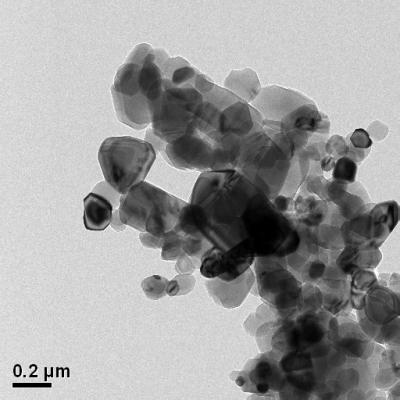
Researchers at the National Institute of Standards and Technology (NIST), in collaboration with private industry and other government agencies, have produced a new reference material for beryllium. Beryllium, an exotic rare-earth metal used as a hardener in high-performance alloys and ceramics, can cause berylliosis—a chronic, incurable and sometimes fatal illness. The new reference material is expected to dramatically improve methods used to monitor workers' exposure and aid in contamination control as well as toxicological research. The use of beryllium in manufacturing dates back to the advent of the atomic age. One of the scientists involved with the famous Chicago experiment known as Chicago Pile-1 to create the first artificial self-sustaining nuclear reaction in 1942 died of berylliosis in 1988. Aside from the nuclear industry, the unique properties of beryllium make it valuable in the manufacture of aircraft and supercolliders.
Beryllium dust can cause a condition characterized by chronic skin and/or respiratory inflammation resembling pneumonia in susceptible individuals and can increase the risk of lung cancers with long periods of exposure. Treating the particles as a threat, the body's immune system floods the affected area with white blood cells. The cells surround the beryllium particles and harden to form inflamed tissue nodules called granulomas. These granulomas can lodge under the skin or in lung tissue where they cause difficulty breathing and a host of other symptoms including fatigue, weight loss and muscle pain. The condition, although treatable, is incurable.
The new Standard Reference Material, Beryllium Oxide Powder (SRM 1877), consists of high-fired crystalline beryllium oxide that has been thoroughly characterized physically and chemically. The particles that make up the powder have an average diameter of about 200 nanometers and have been separated into aggregated clusters that will pass through a 20 mesh screen. NIST scientists Greg Turk and Mike Winchester used a high performance inductively coupled plasma optical emission spectrometry technique developed at NIST to certify the mass fraction (the ratio of pure beryllium in the beryllium oxide) in the compound. NIST provided its partners with support to perform the preparations and did the final analysis of the solutions when they were completed.
According to Winchester, previous analytical tests for exposure monitoring relied on an easily dissolved form of beryllium that was not representative of what people would be exposed to in the field. The new SRM mimics the form of beryllium to which workers would be exposed much more closely and should facilitate much more representative and informative toxicological studies, more sensitive monitoring and more effective clean up of contaminated areas.
Source: National Institute of Standards and Technology (NIST)
Other sources
- New Beryllium Reference Material For Occupational Safety Monitoringfrom Science DailyWed, 23 Sep 2009, 2:14:39 UTC
- New beryllium reference material for occupational safety monitoringfrom Science BlogTue, 22 Sep 2009, 23:07:35 UTC
- New beryllium reference material for occupational safety monitoringfrom PhysorgTue, 22 Sep 2009, 22:35:19 UTC