


Sex in the Caribbean: Environmental change drives evolutionary change -- eventually
Related images
(click to enlarge)
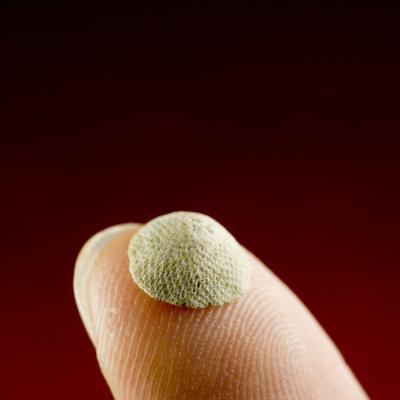
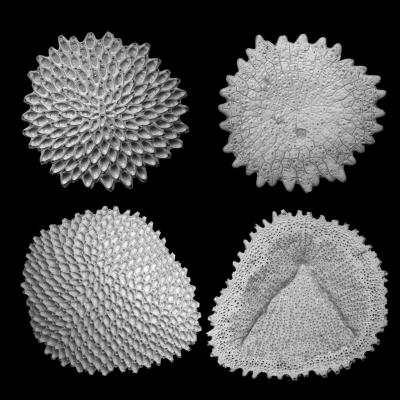
Hungry, sexual organisms replaced well-fed, clonal organisms in the Caribbean Sea as the Isthmus of Panama arose, separating the Caribbean from the Pacific, report researchers from the Smithsonian Tropical Research Institute and Scripps Institution of Oceanography. The fossil record shows that if a species could shift from clonal to sexual reproduction it survived. Otherwise it was destined for extinction, millions of years later. Closure of the Isthmus of Panama involved a protracted sequence of volcanic and tectonic events. During the final phase, between about 4.5 and 3.5 million years ago, the Caribbean underwent a major change from a pea soup-like environment, fed by nutrient-rich waters surging up along South America, into a crystal-clear, nutrient-poor environment.
"As the Caribbean Sea was cut off from the Pacific Ocean, many new species appeared in the fossil record, and all reproduced sexually," said Aaron O'Dea, who holds a Tupper Postdoctoral Fellowship at the Smithsonian Tropical Research Institute.
Well-preserved fossils show that cupuladriid bryozoans, colonial animals similar to corals that walk around on the sea floor, reproduced either by cloning or by sex. To clone a new colony requires immediately available energy, so when nutrients are scarce, it's better not to fragment. Nutrients to form eggs and sperm needed for sex can, on the other hand, accumulate slowly over time.
O'Dea, with Jeremy Jackson, emeritus staff scientist at the Smithsonian and director of the Center for Marine Biodiversity and Conservation at Scripps Institution of Oceanography, measured the relative amount of cloning and sex occurring in species over the last 10 million years in the Caribbean. "The two forms are unmistakable," explained O'Dea. "You can clearly see the first individual that founded a sexual colony, while a clonal colony preserves the fragment from the previous colony from which it cloned."
As predicted, clonal bryozoans rapidly disappeared from the record as the Caribbean was isolated. Species that survived did so by becoming increasingly robust to reduce the chances of fragmentation while those that failed to evolve went extinct. They are still found in the nutrient-rich eastern Pacific.
But not everyone agreed that the extinctions which occurred 1-2 million years later in the Caribbean were caused by the formation of the Isthmus—a pattern also seen in corals and molluscs. Now these authors have the evidence to be sure.
"It's important to distinguish between ecological extinction—when these organisms stopped being important players in the game—and actual extinction, when they disappeared from the geological record," said Jackson. "The idea that extinction may be delayed by millions of years after the cause is worrisome. Today an overwhelming number of species are being reduced in abundance. The forecast from the fossil record is that even if they survive now, the ultimate cause of their extinction may already have passed us by."
This report appears in the Proceedings of the Royal Society B online.
Source: Smithsonian Tropical Research Institute
Other sources
- Sex in the Caribbean: Environmental change drives evolutionary change -- eventuallyfrom PhysorgWed, 29 Jul 2009, 13:07:11 UTC
- Sex in the Caribbean: Environmental change drives evolutionary change -- eventuallyfrom Biology News NetWed, 29 Jul 2009, 4:14:24 UTC
- Sex in the Caribbean: Environmental change drives evolutionary change -- eventuallyfrom Science BlogWed, 29 Jul 2009, 0:35:09 UTC