


How oxidative stress may help prolong life
Related images
(click to enlarge)
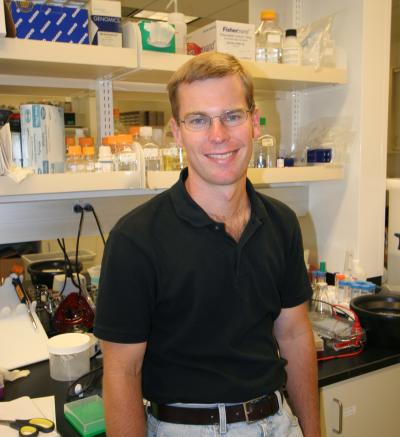
Oxidative stress has been linked to aging, cancer and other diseases in humans. Paradoxically, researchers have suggested that small exposure to oxidative conditions may actually offer protection from acute doses. Now, scientists at the University of California, San Diego, have discovered the gene responsible for this effect. Their study, published in PLoS Genetics on May 29, explains the underlying mechanism of the process that prevents cellular damage by reactive oxygen species (ROS). "We may drink pomegranate juice to protect our bodies from so-called 'free radicals' or look at restricting calorie intake to extend our lifespan," said Trey Ideker, PhD, chief of the Division of Genetics in the Department of Medicine at UC San Diego's School of Medicine and professor of bioengineering at the Jacobs School of Engineering. "But our study suggests why humans may actually be able to prolong the aging process by regularly exposing our bodies to minimal amounts of oxidants."
Reactive oxygen species (ROS), ions that form as a natural byproduct of the metabolism of oxygen, play important roles in cell signaling. These very small molecules include oxygen ions, free radicals and peroxides. However, during times of environmental stress (for example, ultraviolet radiation or heat or chemical exposure), ROS levels can increase dramatically. This can result in significant damage to cellular damage to DNA, RNA and proteins – cumulating in an effect called oxidative stress.
One major contributor to oxidative stress is hydrogen peroxide, converted from a type of free radical that leaks from the mitochondria as it produces energy. While the cell has ways to help minimize the damaging effects of hydrogen peroxide by converting it to oxygen and water, this conversion isn't 100 percent successful.
Ideker and first author Ryan Kelley used the rich functional genomics toolbox of yeast to identify pathways involved in the cell's adaption to hydrogen peroxide. Adaption (or hormesis) is an effect where a toxic substance acts like a stimulant in small doses, but is an inhibitor in large doses.
To shed light on the molecular mechanisms of adaptation, Ideker and Kelley designed a way to identify genes involved in adaptation to hydrogen peroxide. They elicited adaptation by pre-treating cells with a mild dose of hydrogen peroxide, followed by a high dose. They observed that the cells undergoing this adaptation protocol exhibited a smaller reduction in viability than cells exposed to only an acute treatment protocol (in which about half of the cells died.)
To figure out which genes might control this adaptation mechanism, Kelley and Ideker ran a series of experiments in which cells were forced to adapt while each gene in the genome was removed, one by one – covering a total of nearly 5,000 genes. By systematically removing genes, they identified a novel factor called Mga2 – and discovered that this transcription factor is essential for adaptation.
"This was a surprise, because Mga2 is found at the control point of a completely different pathway than those which respond to acute exposure of oxidative agents," said Ideker. "This second pathway is only active at lower doses of oxidation."
This finding may explain recent studies suggesting that eating less may, in fact, raise ROS levels – and, in doing so, provide protection from acute doses of oxidants. This is counter to the hypothesis that caloric restriction extends lifespan in some species because it reduces ROS produced as a by-product of the energy regenerated by mitochondria.
"It may be that adaption to oxidative stress is the main factor responsible for the lifespan-expanding effects of caloric restriction," said Ideker. "Our next step is to figure out how Mga2 works to create a separate pathway – to discover the upstream mechanism that senses low doses of oxidation and triggers a protective mechanism downstream." Further efforts to understand this process may have broad implications on models of aging and disease.
Source: University of California - San Diego
Other sources
- How Oxidative Stress May Help Prolong Lifefrom Science DailySat, 30 May 2009, 2:35:16 UTC
- How oxidative stress may help prolong lifefrom PhysorgFri, 29 May 2009, 10:28:13 UTC
- How oxidative stress may help prolong lifefrom Science BlogFri, 29 May 2009, 0:42:03 UTC