


Formula discovered for longer plant life
Related images
(click to enlarge)
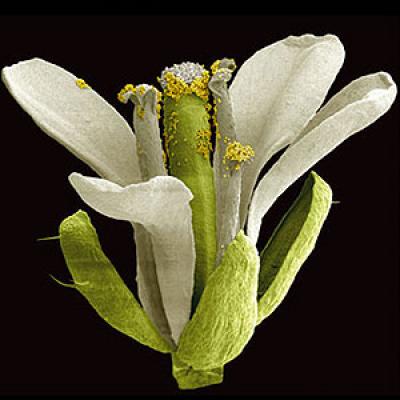
Plants that grow more slowly stay fresh longer. In their study now published in PLoS Biology, scientists at the Max Planck Institute for Developmental Biology in Tübingen have shown that certain small sections of genes, so-called microRNAs, coordinate growth and aging processes in plants. These microRNAs inhibit certain regulators, known as TCP transcription factors. These transcription factors in turn influence the production of jasmonic acid, a plant hormone. The higher the number of microRNAs present, the lower the number of transcription factors that are active, and the smaller the amount of jasmonic acid, which is produced by the plant. The plant therefore ages more slowly, as this hormone is important for the plant's aging processes. The researchers have succeeded for the first time in describing the antagonistic regulation of growth and aging in plants. Since the quantity of microRNAs in the plants can be controlled by genetic methods, it may be possible in future to cultivate plants that live longer and grow faster. (PLoS Biology, September 23, 2008)
MicroRNAs are short, single-strand sections of genes that regulate other genes. They do this by binding to complementary sections of the genetic material, thus preventing them from being read and implemented in genetic products. In plants, microRNAs mainly inhibit other regulators, so-called transcription factors. These factors can switch genes on or off by binding to DNA sections, thus activating or blocking them so that either too many or too few proteins are formed. Since proteins control metabolic processes, an imbalance leads to more or less clearly visible changes to the plant.
The scientists in Prof. Detlef Weigel's department at the Max Planck Institute for Developmental Biology have investigated the effects that the transcription factors of the TCP family have on the growth and aging of the thale cress model plant (Arabidopsis thaliana). These transcription factors are regulated by the microRNA miR319.
It was already known that miR319-regulated transcription factors affect the growth of leaves. Using a combination of biochemical and genetic analyses, the researchers have now discovered that the transcription factors also regulate those genes that are essential for the formation of the plant hormone jasmonic acid. The higher the amount of microRNA miR319 present in the plant, the lower the number of transcription factors that are produced. This results in smaller amounts of jasmonic acid which can be synthesized. Plants containing little jasmonic acid age more slowly: The leaves become yellow and the plant dies. This process can be stopped by treating the plant with the hormone.
"Our studies show that the transcription factors, which are regulated by the microRNA miR319, exert a negative influence on the growth of plants, and also lead to premature aging. The mechanism discovered here is a further milestone in the attempt to explain the relationships of genetic regulation in plants. Only when we have a better understanding of these processes will we be able to produce plants that have particularly desired properties," says Detlef Weigel, who heads the project.
Source: Max-Planck-Gesellschaft
Other sources
- Formula discovered for longer plant lifefrom Biology News NetFri, 26 Sep 2008, 11:21:48 UTC
- Formula discovered for longer plant lifefrom PhysorgTue, 23 Sep 2008, 18:28:05 UTC
- Formula discovered for longer plant lifefrom Biology News NetTue, 23 Sep 2008, 16:28:36 UTC
- Formula Discovered For Longer Plant Lifefrom Science DailyTue, 23 Sep 2008, 15:35:11 UTC
- Formula Discovered For Longer Plant Lifefrom Science DailyTue, 23 Sep 2008, 1:14:04 UTC