


Tiny capsules deliver
Related images
(click to enlarge)
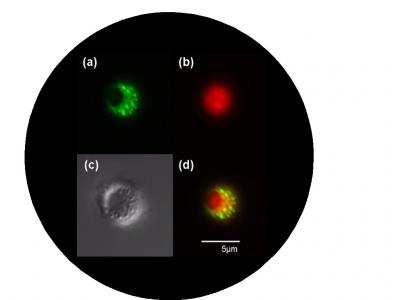
A tiny particle syringe composed of polymer layers and nanoparticles may provide drug delivery that targets diseased cells without harming the rest of the body, according to a team of chemical engineers. This delivery system could be robust and flexible enough to deliver a variety of substances. "People probably fear the effects of some treatments more than they fear the disease they treat," says Huda A. Jerri, graduate student, chemical engineering. "The drugs are poison. Treatment is a matter of dosage so that it kills the cancer and not the patient. Targeted treatment becomes very important."
Newer approaches to drug delivery include particles that find specific cells, latch on and release their drugs. Another approach allows the cells to engulf the particles, taking them into the cell and releasing the drug. However, the requirements for these delivery systems are complicated and challenging to implement.
The Penn State researchers' approach produces a more universal delivery system, a tiny spherical container averaging less than 5 microns or the diameter of the smallest pollen grains.
The spheres are formed around solid microparticles that are either the drug to be delivered or a substance that can be removed later leaving a hollow sphere for liquid drugs. They reported their results online in Soft Matter.
Alternating positive and negative layers of material form the microcapsules. The capsules are created while attached to a flat surface so the section of the sphere touching the surface is not coated, leaving about 5 percent of the surface as an escape area for the drugs. The microcapsule, excluding the exit hole, is then covered in a slippery, non-stick barrier coating.
"These are not the first microcapsules for drug delivery developed, but a previous attempt had surfaces that stuck together and clumped," says Velegol. "We also designed the tiny hole in the sphere for controlled delivery and that is a new development."
Targeted drug delivery systems release their drug from the moment they enter the body. The microsyringes, however, while releasing material continuously, do so only from the tiny hole in their surface and not from the other 95 percent of the sphere's surface. This will concentrate the drug at the target and reduce the amount of toxins circulating in the body.
"These particles are delivery vessels to which you can add whatever you want when you need it," says Jerri. "Drugs can be either solid -- incorporated when the capsules are made -- or liquid -- filled later. Chemicals that target the diseased cells can be attached in a variety of ways."
To serve as viable, flexible drug delivery systems, these microcapsules should be off the shelf and not completely tailor made for each application. The researchers tested the robustness of the microsyringes by dehydrating and then reconstituting them. Their ability to withstand long periods dried out and then successfully rehydrate is important both for shelf life and because that is the way that liquid medications will be inserted in the microcapsules as needed.
To ensure that the spheres refill, the researchers used a solution containing fluorescent dyes. The filling and emptying of the microcapsules are controlled by the acidity of the liquid in which the tiny beads float. Successful rehydration and filling suggest that these microsyringes could be manufactured and stored until needed. They could then be filled with the appropriate drug and have the proper targeting agent attached to treat specific diseases and patients.
"The masking process used to manufacture these microcapsules is relatively inexpensive, current technology and is scalable," says Velegol. "This means they could be mass produced."
Source: Penn State
Other sources
- Tiny Nanoparticle Capsules Deliver Medicinesfrom Science DailyTue, 13 Jan 2009, 3:35:13 UTC
- Tiny capsules deliver drugsfrom PhysorgMon, 12 Jan 2009, 17:35:08 UTC