


Operate a piano pedal with the mouth
Related images
(click to enlarge)
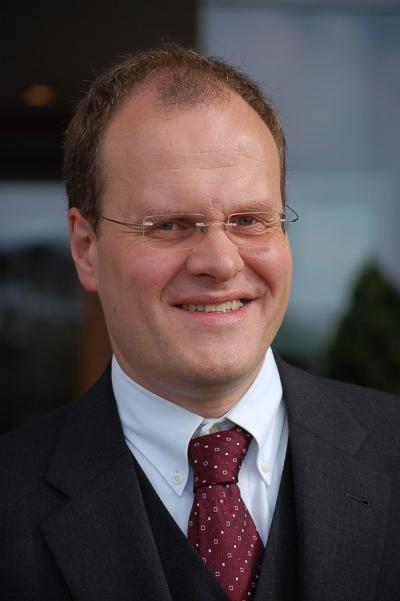
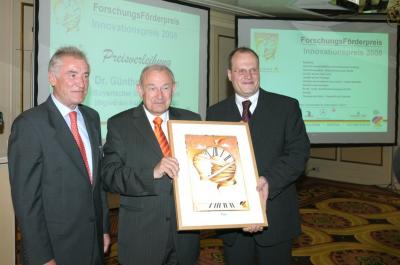
A wish could come true for paraplegics who play the piano and are paralyzed from the hips down: the Heidelberg researcher Dr.-Ing. Rüdiger Rupp has developed a method with which a pianist can operate the right pedal of a concert grand wirelessly – a first in the world. A paraplegic pianist can thus overcome the handicap of being able to play the piano using only his arms and hands. Dr. Rupp, director of the research department at the spinal cord injury unit of the Orthopedic Clinic of Heidelberg University Hospital (Director: Prof. Dr. Hans Jürgen Gerner), was honored for this invention with € 15,000 from the Innovation Award 2008 of the German Paraplegic Foundation (DSQ). For more than 20 years, there have been electromagnetic pedal controls for paraplegic pianists – mostly accident victims – that were invented by the renowned Bayreuth piano manufacturer Steingraeber & Söhne and are custom made. Pulse generators such as light sensors, headrests, back cushions, neck braces, and mouth tubes make it possible for disabled pianists to play pieces that include pedal work – the complete works from Beethoven to the contemporary period.
Pedal controls via a bite splint
The disadvantage of these technical solutions is that magnets are too un-differentiated for use with pianos because they can only switch the pedal on and off. "Intermediate stages such as half-pedal or flutter were not possible. In addition, traditional assistive devices were visible to concert viewers", summarizes Dr. Rüdiger Rupp the disadvantages of the current systems.
His ingenious invention allows the Heidelberg researchers to compensate for this decisive failing. Together with his team, he developed a bite splint over almost two years with a pressure-sensitive sensor that the pianist can hold in his mouth to control the pedal according to the markings on the music.
This bite splint was the solution for the problem faced by a paraplegic pro-fessional pianist from Norway with which the piano maker from Bayreuth approached Dr. Rupp. The concert can be held without any visible cables or devices, thus approaching normality. "We assess the strength with which a paraplegic clenches his teeth. Depending on how strongly he does this, he can control the pedal position," describes the Heidelberg re-searcher his innovation.
This uses a highly sensitive strength or pressure sensor, which is embed-ded in the chewing surface of a bite splint attached to the upper jaw. "The disabled patient can thus control the entire range of pedal action – includ-ing intermediate positions and the speed with which the pedal is de-pressed," explained Rupp.
Transmitter in the cheek
A wireless transmitter is installed to an electric motor attached to the ped-als of the concert grand. A remote module, a kind of miniature transmitter with minimal power consumption placed in the right cheek, forwards the sensor signals to the electric motor, which then operates the pedal. The remote module, originally introduced by a US company, is customized to the needs of the user.
In his left cheek, the paraplegic pianist has a button cell that provides energy for twelve hours. The innovation in this highly sophisticated system is that analog, i.e. graduated signals are transmitted consisting of far more than just "on-off". When pedal markings appear in the notes, the paraple-gic pianist literally grits his teeth, to a greater or lesser extent – and can achieve the same differentiated sounds as a non-disabled pianist.
New project: control pedals with the tongue
For some ten years, the researcher from Heidelberg and his co-workers have been developing systems with which paralyzed people (paraplegics and quadriplegics) can control technical aids. Rupp's group of researchers have specialized especially in system for Functional Electrical Stimulation, what are known as neuroprosthetics, with which high-level paraplegics can regain part of the grasping function of a paralyzed hand. His newest invention makes it possible for paraplegic pianists whose legs are para-lyzed to perform in public again and go on tours – another bit of normality for the disabled.
With the help of the award money, Rüdiger Rupp and his team are already working on the next step, aimed at the other two pedals of the grand piano and enhancing control – a pressure-sensitive film placed behind the inci-sors will measure tongue strength and position and convert them to corre-sponding analog signals that are transmitted directly to the pedals of the concert grand.
Source: University Hospital Heidelberg
Other sources
- Paraplegic Pianists Can Operate A Piano Pedal With The Mouthfrom Science DailyFri, 24 Oct 2008, 15:35:08 UTC
- Operate a piano pedal with the mouthfrom PhysorgFri, 24 Oct 2008, 14:35:49 UTC