


Non-nuclear families function, too
Related images
(click to enlarge)
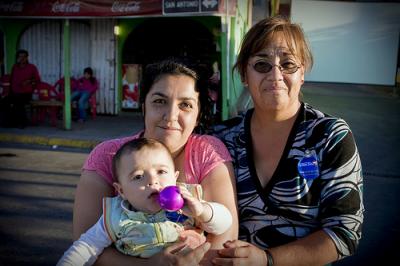
The conventional family has changed over the past decade. According to a new study by the Working Group on Adolescence of the Andalusian Society of Family and Community Medicine, which has been published in the Spanish journal Atención Primaria, adolescents' perception of proper family functioning has little to do with the traditional nuclear structure. When children turn into adolescents this leads to changes in family patterns and roles. "Previously, the nuclear family, which is the most common model in Western society and is made up of only the father, mother and children, was presented as the family type best able to tackle these changes, and to ensure the best upbringing for children," Alejandro Pérez Milena, lead author of the study published by Atención Primaria and a family doctor at the El Valle de Jaén Health Centre, tells SINC.
The results of the new study show that family structure is no longer decisive in an adolescent's perception of proper family function. "At the start of the study, teenagers from nuclear families had a better perception of family function, but this has changed to become equal with those of other family structures", explains the expert.
Older teenagers (16 to 18 years) have improved their perception of family functionality, regardless of factors such as family structure or gender, which the authors of the study believe may be related to the progressive delay in their leaving home.
"However, social reality shows that family structure has changed over recent years, with families with different structures being increasingly common", points out Pérez Milena. "During adolescence, families should focus on promoting a positive family dynamic, regardless of their structure".
The researchers, all of whom are members of the Study Group on Adolescence of the Andalusian Society of Family and Community Medicine, carried out four surveys over 10 years (1997-2007) on 1,356 students from two secondary schools, one of which was rural and the other urban, using the Apgar family test, which measures a teenager's satisfaction with the functioning of his or her family.
Previous studies pointed to families without a regular structure (headed by a lone parent, or other family members such as grandparents or uncles, or including the children of other partners, etc.) leading to a greater risk of teenagers living in such families turning to drugs or being violent, having mental health problems or even exhibiting criminal behaviour.
Source: FECYT - Spanish Foundation for Science and Technology
Other sources
- Non-nuclear families function, toofrom PhysorgMon, 19 Oct 2009, 15:21:09 UTC