


Understanding donor-recipient genetics could decrease early kidney transplant complications
Related images
(click to enlarge)
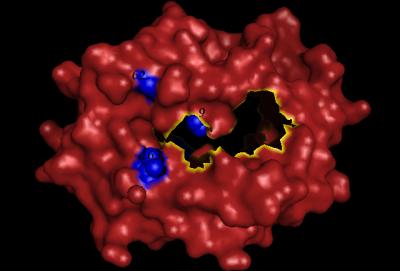
Researchers at the University of Pennsylvania School of Medicine have found an association between the genetics of donor-recipient matches in kidney transplants and complications during the first week after transplantation. The team, led by Malek Kamoun MD, PhD, Professor of Pathology and Laboratory Medicine and Director of the Clinical Immunology and Histocompatibility Laboratory, and Harold Feldman MD, MSCE, Professor of Medicine and Epidemiology, has shown that small differences in the building blocks of cell-surface proteins used to match donors and recipients for deceased-donor kidney transplantation was associated with an increased risk for delayed allograft function, or DGF. The investigators published their findings this week online in the Proceedings of the National Academy of Sciences.
DGF is a common (30 to 50 percent incidence), but severe, malfunction of the transplant requiring dialysis in the first week after implantation, and has been associated with an increased risk of allograft rejection. In 2007, there were over 10,500 deceased-donor kidney transplants in America, according to the United Network for Organ Sharing.
"If we can validate the association we found in a larger dataset, then the genetic data can potentially be used to better match donors and recipients, thereby decreasing the level of immunosuppressants needed," notes Kamoun. "The ultimate goal is to overcome the need for strong immunosuppressants. With immunosuppression comes an increased risk for infection and cancer, among other significant complications."
The cause of DGF is poorly understood, with both non-immunological factors such as cause of death, donor age, recipient race, and immunological factors, playing a role. "But most studies haven't clearly shown an association between the HLA-specific cell-surface proteins and DGF," says Kamoun. "We have shown that amino acid variations in HLA-A proteins are associated with DGF."
HLA cell-surface proteins allow the body to identify itself to avoid autoimmune reactions. Every person has a unique HLA signature. HLA proteins also identify foreign invaders in the body. "Their primary purpose is to distinguish, self versus non-self," explains Kamoun. "That's why we need to immunosuppress recipients following transplantation."
The researchers looked at genetic variations in recipient and donor HLA proteins from blood samples (blood cells express HLA proteins) taken from 697 kidney transplant recipients and their deceased donors to obtain paired samples.
HLAs come in a variety of forms, differing by the sequence of their building blocks, or amino acids, from individual to individual. "Donor-recipient matching is based on genetic variations in HLA proteins," says Kamoun. "By examining the HLA amino acid sequences of donor-recipient pairs, we asked: Are these genetic differences significantly associated with the recipient's experience of DGF?"
Out of 66 amino-acid variations in HLA-A proteins, they found 15 were more strongly associated with DGF. They then focused on those, and taking other non-immunological factors into account, narrowed the important differences down to three amino acids that were highly associated with DGF. These are amino acids that play an important role in how pieces of foreign proteins are presented to immune cells. HLA proteins display these foreign molecules to specific recipient immune cells, called T lymphocytes.
Next steps for the project are to use a larger sample size from the UNOS database. Instead of looking at several hundred, they plan to look at thousands of donor-recipient pairs to validate their findings. "We also expect to see that these critical amino acids for DGF will vary with race," predicts Kamoun. Future studies will also include the evaluation of other clinical outcomes such as acute rejection and graft loss.
Source: University of Pennsylvania School of Medicine
Articles on the same topic
- Urine protein test detects kidney dysfunction in transplant patientsWed, 26 Nov 2008, 22:36:36 UTC
- Study compares strategies for BK virus nephropathyWed, 26 Nov 2008, 15:42:54 UTC
Other sources
- Disease genetics may be puzzlingfrom Science AlertWed, 26 Nov 2008, 10:14:07 UTC
- Donor-Recipient Genetics and Early Kidney Transplant Complicationsfrom PhysorgTue, 25 Nov 2008, 20:56:05 UTC