


Resuscitation technique after brain injury may do more harm than good
Related images
(click to enlarge)
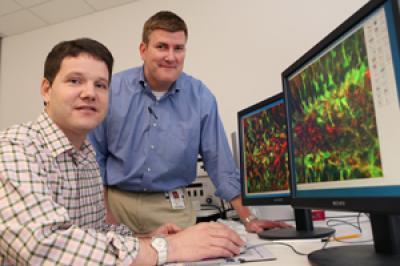
The current standard practice of giving infants and children 100 percent oxygen to prevent brain damage caused by oxygen deprivation may actually inflict additional harm, researchers at UT Southwestern Medical Center have found. Brain damage caused by oxygen deprivation, known as hypoxic-ischemic brain injury, is one of the most common causes of death and long-term neurological damage among infants and children. This can happen during birth trauma, near drowning and other crises.
The UT Southwestern researchers found that mice treated with less than a minute of 100 percent oxygen after a hypoxic-ischemic brain injury suffered far greater rates of brain-cell death and coordination problems similar to cerebral palsy than those allowed to recover with room air.
"This study suggests 100 percent oxygen resuscitation may further damage an already compromised brain," said Dr. Steven Kernie, associate professor of pediatrics and developmental biology and senior author of the study, which appears in the July issue of the Journal of Cerebral Blood Flow & Metabolism.
Most of the damage involved cells that create myelin, a fatty substance that insulates nerve cells and allows them to transmit electrical signals quickly and efficiently. Infants have much less myelin than adults; as myelin develops in children they become more coordinated. Areas of the brain with dense areas of myelin appear white, hence the term "white matter."
"Patients with white-matter injuries develop defects that often result in cerebral palsy and motor deficits," Dr. Kernie said.
Myelin comes from cells called glial cells, or glia, which reach out and wrap part of their fatty membranes around the extensions of nerve cells that pass electrical signals. The brain creates and renews its population of glial cells from a pool of immature cells that can develop into mature glia.
In their study, the researchers briefly deprived mice of oxygen, then gave them either 100 percent oxygen or room air, which contains about 21 percent oxygen, 78 percent nitrogen and 1 percent other gases.
After 72 hours, mice given 100 percent oxygen fared worse than those given room air. For example, they experienced a more disrupted pattern of myelination and developed a motor deficit that mimicked cerebral palsy.
The population of immature glial cells also diminished, suggesting that the animals would have trouble replacing the myelin in the long term.
"We wanted to determine whether recovery in 100 percent oxygen after this sort of brain injury would exacerbate neuronal injury and impair functional recovery, and in these animals, it did impair recovery," Dr. Kernie said. "Our research shows even brief exposure to 100 percent oxygen during resuscitation actually worsens white-matter injuries."
Dr. Kernie said adding pure oxygen to the damaged brain increases a process called oxidative stress, caused by the formation of highly reactive molecules. The researchers found, however, that administering an antioxidant, which halts the harmful oxidation process, reversed the damage in the mice given 100 percent oxygen.
"Further research is needed to determine the best possible concentration of oxygen to use for optimal recovery and to limit secondary brain injury," Dr. Kernie said. "Research is now being done to determine the best way to monitor this sort of brain damage in humans so we can understand how it correlates to the mouse models. There are many emerging noninvasive technologies that can monitor the brain."
Source: UT Southwestern Medical Center
Other sources
- Resuscitation Technique After Brain Injury May Do More Harm Than Goodfrom Science DailyTue, 1 Jul 2008, 14:21:32 UTC