


Oxidation of contaminants as if they got burnt in the water itself
Related images
(click to enlarge)
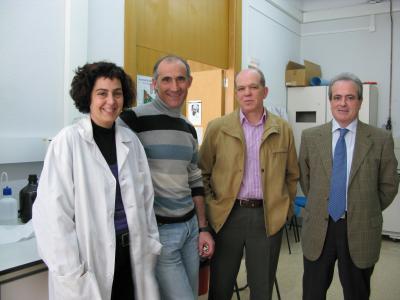
Reducing the level of contamination of water is the aim of the line of research being undertaken by Dr. José Ignacio Lombraña at the University of the Basque Country’s Faculty of Science and Technology. He is investigating chemical treatment capable of eliminating contaminants dumped by industry, in order to reuse the waste water. Industrial activity is one of the principal causes of contamination in water, given that industry dumps large amounts of chemical compounds into rivers that are not capable of degrading by themselves. While most organic waste is biodegradable, others, such as plastics, colorants or detergents, ever-present in industry, stay in the water impeding its use as a resource. It was within this context that Dr. José Ignacio Lombraña led his research at the Faculty of Science and Technology of the University of the Basque Country (UPV/EHU). His goal was to find new technologies to eliminate contaminant substances dumped in water, by means of a process known as advanced oxidation. As Dr. Lombraña stated, “this involves oxidising the chemical compound – as if the substance were being burnt in the water itself”.
In order for the contaminants to be oxidised in the water, the Energy and Environmental Chemical Engineering team to which Dr. Lombraña belongs, used ozone (O3) and hydrogen peroxide (H2O2), two molecules that, under certain conditions, achieve great oxidative efficiency. The chemical process known as advanced oxidation enables the reduction of the level of contaminants to the point where they can degrade by themselves or otherwise continue to be treated using conventional methods. Dr. Lombraña stated that, “chemically it would be possible to eliminate them completely but, to do this, a great amount of oxidant would be required and under very costly conditions which would not be economically viable”. The advantage of ozone and hydrogen peroxide is that the process involves “clean” molecules, “unlike other substances such as, for example, chlorine, these molecules disappear on fulfilling their oxidative function”, explained Dr. Lombraña.
Contamination of water as a starting point
Given the practical nature of the research, Dr. Lombraña takes a real problem as a starting point; for example, the presence of a contaminant that prevents using the water from a particular source. In the first place he chose three large groups of contaminants: colorants, detersive water (contaminated with detergents) and phenolics (containing phenol and derivatives). Once the compound responsible for the contamination is defined, “we construct a waste water model which facilitates its study, i.e. we create a kind of ‘synthetic water’ that contains basically the same substance as that we wish to oxidise”, explained Dr. Lombraña.
One of the main achievements of this research undertaken at the UPV/EHU was precisely the defining of models for the degradation of various compounds or, as the Director of the project put it, “describing why a molecule passes through phases or states until its total degradation”. Notable amongst the oxidation techniques studied, was the FENTON reagent (a mixture of iron salts and hydrogen peroxide) and the combination of hydrogen peroxide with ultraviolet rays.
The research team finally started the verification stage: “We tested the previously described degradation models in water dumped by companies in the area in order to check the efficacy of the oxidants in the destruction of these key contaminants”, pointed out Dr. Lombraña.
The work of the research team at the UPV-EHU Faculty of Science and Technology was not limited to analysing and describing the oxidation processes of different contaminants. It also studied the design of the equipment required for this work. Thus, a number of ozonisation prototypes (installations for applying ozone to water) were developed, optimising the conditions for producing oxidation.
A technique with a vision for the future
Advanced oxidation is a technology which is still at the development stage and, thus, is still not usually used in water treatment plants. The aim of the research led by José Ignacio Lombraña is to contribute to the knowledge base required for this technology to be applicable, not so much at water treatment plants as at treatment plants specifically devoted to water of industrial origin. “The greatest difficulties arise when we come across test banks as companies want instant solution products and only the largest enterprises can afford the investment in pilot prototypes for their installations”, stated Dr. Lombraña.
The project, entitled, New strategies in advanced oxidation technologies using ozone and hydrogen peroxide, received a grant from the Ministry of Education and Science, and falls within the remit of the overall research lines into the recovery of waste water. The team currently led by Dr. José Ignacio Lombraña has embarked on a new project coordinated by the Pyrenees Work Community and in which the Rovira i Virgili University of Tarragona and the University of Toulouse (France) are taking part.

