


Visits to Nana's may keep toddlers from developing negative age stereotypes
Related images
(click to enlarge)
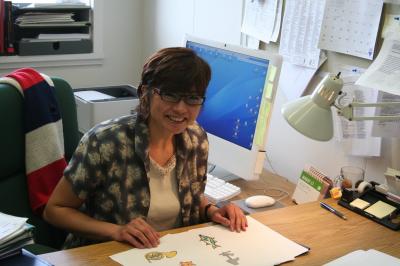
It's easy to list the negative stereotypes attributed to the elderly: they are considered forgetful, hard-of-hearing, absent-minded and confused. What's unsettling is that those stereotypes can be present in children as young as two or three.
Research conducted by the University of Alberta's Sheree Kwong See, a psychology researcher, has identified that those stereotypes exist in some children at that age, which could adversely affect them when they are older.
"We've been able to show really early on that kids, when they're just starting to talk, have established beliefs about older people," said Kwong See. "We're seeing what we could call ageism by about age three."
In a recent study to be published in the journal Educational Gerontology, Kwong See and fellow researcher Elena Nicoladis measured the reactions of young children after being quizzed on vocabulary words by either an older or younger adult. Results showed that children who had less exposure to older adults had a stronger language bias against the older person in the experiment than those who had more exposure to older people.
"If you are interacting with 'nana' more frequently, you'll start to see that she's a pretty good teacher of words even though she's old," said Kwong See. "When you have little contact dominant negative cultural stereotypes emerge. You think an older person isn't as alert or in-the-know as a young person and maybe is not as good a teacher."
However, before making frantic trips to grandmother's house to curb the bias, Kwong See cautions that this is not the sole factor from which these biases can develop.
"They're getting negative images of aging from cartoons, from their story books, from watching how other people interact with seniors," she said. "But, they're also starting to pick up some of the positive images as well if they get lots of good interactions."
The long-term implications for these biases can be damaging in their interaction with and treatment of the elderly throughout their lives and in their own self concept as they age..
"Eventually those same children, once they know those stereotypes, may find that the stereotypes become a self-fulfilling prophecy," said Kwong See. "They will become their stereotypes as they grow older."