


College cocktails lead to science career
Related images
(click to enlarge)
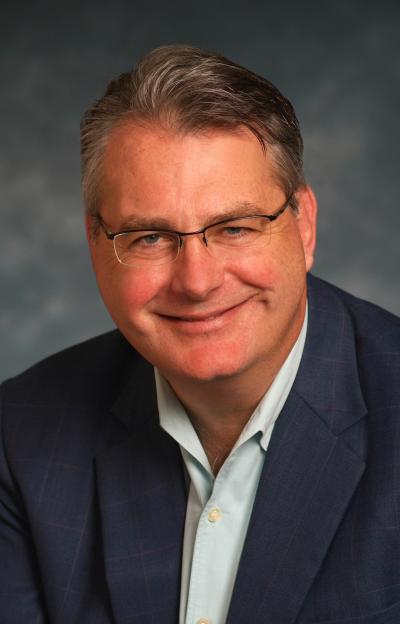
If you knew what possessed the young Jim Sacchettini to become a biochemist, you might look upon the "bar scene" more approvingly. But that story's for later. Instead, ponder what Sacchettini calls "the diseases of the poor" – infectious diseases that not long ago were considered wiped from the face of the Earth - tuberculosis and malaria, for instance.
Sacchettini saw these maladies firsthand in the Bronx. He had gone there in 1990 from St. Louis, Mo., after earning his doctorate at Washington University.
"It was like being in a developing country," said Sacchettini, who was a researcher at Albert Einstein School of Medicine. "And we were awakened to the fact that infectious diseases like tuberculosis really had never left."
Einstein is near Rikers Island, a New York City jail which houses some 17,000 inmates at a time, according to the city's Correction Department. In the late 1980s, a drug-resistant form of TB developed among inmates who unwittingly spread it throughout New York as they were released, Sacchettini noted.
At the time, though he had already started working on TB, there was not much research going on for infectious diseases. But the Rikers episode and others caused a boom that focused on the need worldwide for better treatment options for this disease, he said. Sacchettini came to Texas A&M University in 1996 and now is professor of biochemistry and biophysics with Texas AgriLife Research and Wolfe-Welch Chair in Science director.
With this focus on infectious diseases, Sacchettini, and colleague Dr. Thomas Ioerger in the university's computer science department, developed a method which is the basis for all his drug discovery research: make the protein that is principle to the disease, crystalize it and depict it in 3-D form on a computer, then after seeing the protein's vulnerable spot, make inhibitors to block its function.
"It's virtual drug screening," he said. "At the protein's active site, the computer tries to fit drug-like molecules into it to block it."
With some 2 million molecules to screen, that process might have taken 40 years to complete by old methods, Sacchettini said. But it takes his lab just two weeks to process because Sacchettini and colleagues thought of a way to use university computers in off hours while they are not being used by students.
When a blocker is found, he added, the lab buys or makes the compound and creates another 3-D image "with the inhibitor bound to it and try to improve on it," he said. "No matter the disease, the process is always the same."
Repetitious but not boring, said Sacchettini whose enthusiasm extends to a 50-person team. On a recent visit to his lab, technicians and students bustled about like stock floor traders in an up market.
"What's challenging or unusual, that's what keeps my job exciting," Sacchettini said. "Something that strikes you where you think you can make a difference."
In addition to TB and malaria, his team is studying drug design for Alzheimer's, type 2 diabetes and cancer.
"The challenge comes from the differences among proteins," he said. "If I think someone has never tried something, that's the drive for me to get into it.
"Sometimes we try an idea and it doesn't work, but being an academic means we have the freedom to try new ideas and approaches to solve a long-standing problem."
As for his career choice in college, Sacchettini first worked as a bartender.
"I could mix drinks without measuring," Sacchettini recalls. "Turns out that was perfect training for biochemistry."