


Where will grizzly bears roam?
Related images
(click to enlarge)
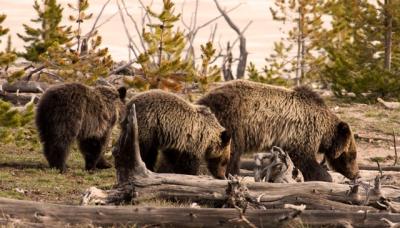
The independent assessment, written by WCS Senior Conservation Scientist Dr. John Weaver, is a compilation and synthesis of the latest information on these species – and how climate change may affect them – from 30 biologists in the region and from nearly 300 scientific papers. In addition, Weaver spent four months hiking and riding horseback through these remote roadless areas to evaluate their importance for conservation. The Crown of the Continent is a trans-border ecosystem of dramatic landscapes, pristine water sources, and diverse wildlife that stretches more than 250 miles along the Rocky Mountains from Glacier National Park-Bob Marshall Wilderness in Montana north to the Canadian Rockies. Weaver focused his assessment on public lands in the Montana portion –one of the most spectacular and intact ecosystems remaining in the lower 48 states. Since 1910 when Glacier National Park was established, citizens and government representatives have worked hard to protect the core wildlands and wildlife in this region.
"These visionary leaders left a great gift and remarkable legacy," said Dr. Weaver, "But new data and emerging threats like climate change indicate it may not have been enough. There is a rare opportunity now to complete the legacy of conservation for present and future generations."
Weaver added: "To help vulnerable fish and wildlife cope with new challenges, we need to build upon existing protected areas and enhance connectivity across diverse habitats."
Accordingly, Weaver mapped the distribution of six species: grizzly bear, wolverine, mountain goat, bighorn sheep, bull trout, and westslope cutthroat trout, and identified their current and future habitats and the connections between them.
For example, native bull trout require colder water than other fish, especially for spawning and survival of young fry. With streams warming due to climate change, protection of clear, cold, and well-connected streams at higher elevations may provide refuge for this threatened species. The rare wolverine relies upon snow in the high country for denning and rearing young during spring, but warmer winters in the future may result in less snowpack. In his report, Weaver mapped current and future suitable habitat for wolverine based upon studies by fellow WCS researcher Robert Inman.
Using these maps, Weaver scored and ranked the relative importance of the remaining roadless areas in the Crown of the Continent in Montana. He recommends that 888,000 acres (67 percent of the roadless lands) be added to the National Wilderness system to guarantee the most secure protection. Another 310,000 acres (23 percent) would be managed as 'Backcountry' for non-motorized recreation and conservation. The remaining 10 percent has lower value for these fish and wildlife species.
Weaver said "These conservation actions would better protect year-round habitats for these vulnerable species, safeguard genetic integrity, enhance connectivity between key areas, and provide options for movement in response to climate change."
WCS North America Program Director Dr Jodi Hilty said "The Crown of the Continent Ecosystem is one of the great wild landscapes remaining in the world. We believe that Dr. Weaver's unique synthesis and comprehensive report will provide critical information for those discussing and deciding the future of the Crown."
Source: Wildlife Conservation Society
Other sources
- Where Will Grizzly Bears Roam?from Newswise - ScinewsWed, 22 Jun 2011, 19:00:40 UTC
- Where will grizzly bears roam? Conservation value of roadless public land in Montana's Crown of the Continent Ecosystemfrom Science DailyTue, 21 Jun 2011, 22:30:22 UTC
- Where will grizzly bears roam?from PhysorgTue, 21 Jun 2011, 20:31:30 UTC