


Roe of marine animals is best natural source of omega-3
Related images
(click to enlarge)
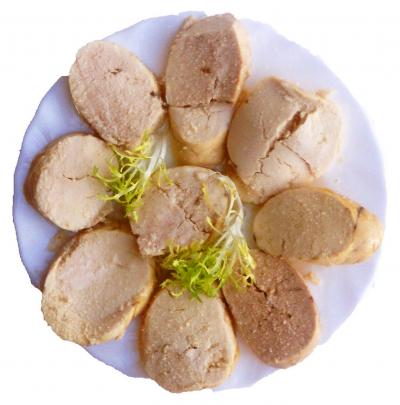
The roe of hake, lumpsucker and salmon is the best dietary source of Omega 3, according to a study carried out by researchers at the University of Almería (UAL). The scientists analysed the eggs, or roe, of 15 marine animals, and found all of these contained high levels of these fatty acids, which are essential to the human body. Until now there had been no precise understanding of the nutritional potential of the roe of marine animals, but a team of researchers from the UAL has now shown that this is one of the best natural sources of Omega 3 fatty acids, which are essential for ensuring the correct development of a wide variety of metabolic functions in the human body.
"We have classified these eggs as unequivocal sources of Omega 3, and have proven that this appears at high concentrations in all the species studies", José Luis Guil Guerrero, director of this study and a researcher in the Food Technology Department of the UAL, tells SINC.
The results, published in the European Journal of Lipid Science and Technology, show that Omega 3 fatty acids are present in all fish roe, but especially in the eggs of Atlantic bonito (Sarda sarda), mackerel (Scomber scombrus), squid (Loligo vulgaris), cuttlefish (Sepia sp.), lumpsucker (Cyclopterus lumpus), hake (Merluccius merluccius) and salmon (Salmo salar).
The team studied the fatty acid content in the eggs of 15 marine animals, focusing their research on two types of Omega 3 – eicosapentaenoic acids (EPA) and docosahexaenoic acids (DHA). More than 30% of the fatty acids found in these eggs were EPA and DHA.
The conclusions of the study also show that minimal consumption of lumpsucker, hake or salmon roe satisfies the human body's Omega 3 essential fatty acid requirements, because of its levels of EPA y DHA. A lack of these compounds is associated with cardiovascular disease, hypertension, depression, diabetes, poor development of the nervous and reproductive systems, and inflammatory diseases, such as Crohn's disease.
"Aside from their nutritional importance, we could also make use of roe to extract its oil, which is rich in PUFAs (polyunsaturated fatty acids) and can be used as a dietary supplement, since it has a higher Omega 3 content than regular oils, for example salmon and tuna oil", explains Guil Guerrero.
Source: FECYT - Spanish Foundation for Science and Technology
Other sources
- Roe of marine animals is best natural source of omega-3from Science BlogFri, 11 Dec 2009, 17:21:31 UTC
- Roe of marine animals is best natural source of omega-3from PhysorgFri, 11 Dec 2009, 16:28:14 UTC