


UAB researchers discover antibody receptor identity, propose renaming immune-system gene
Related images
(click to enlarge)
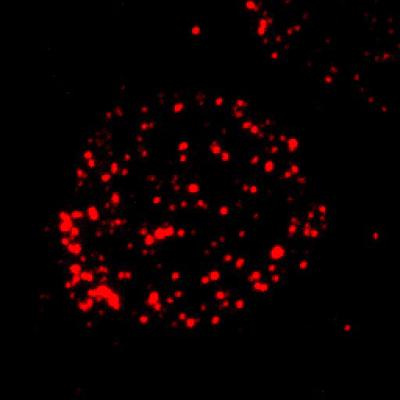
Researchers at the University of Alabama at Birmingham (UAB) have uncovered the genetic identity of a cellular receptor for the immune system's first-response antibody, a discovery that sheds new light on infection control and immune disorders. The discovery is such a crucial part of immunology that UAB researchers, in conjunction with Japanese researchers, are asking that the gene linked to this antibody receptor be renamed to better describe its role in early immune responses. The proposed name is the Fc mu receptor (FCMR) gene; it describes a key region of the immunoglobulin M (IgM) antibody that binds this receptor. IgM is by far the largest antibody in the circulatory system, and it is the first antibody on the scene in response to an invading pathogen, such as a virus or bacteria. The IgM-tagged pathogens then trigger various immune responses through this receptor FCMR. The new findings are reported online in the Journal of Experimental Medicine and in the publication's Nov. 23 print edition.
Previously, researchers who had identified this gene thought they were dealing with a molecule that regulated cell death and they named it "toso" – a reference to the Japanese medicinal sake often drunk on New Year's Day to symbolize a long life. But the toso name is inaccurate, as were many of the earlier descriptions of this gene's function, says Hiromi Kubagawa, M.D., a professor in the UAB Department of Pathology and the lead study author.
"The new study shows, and DNA analysis helped us to confirm, that the Fc mu receptor is made from the gene we describe," Kubagawa says. "This is a fundamental discovery that science has been waiting to answer for nearly 30 years."
To identify the true FCMR gene, the UAB researchers used chronic lymphocytic leukemia cells as a source of this gene, since such leukemia cells are known to over-express the Fc mu receptor. This enabled researchers to identify the FCMR gene more efficiently.
The potential novel agents that target and regulate FCMR function hold promise in fighting cancer, AIDS and autoimmune disorders, says Kubagawa. The genetic description and request for renaming the gene does not prove it has a direct role in any particular disease; however, it fills a crucial gap in understanding the science behind immune deficiencies and allergy diseases.
Source: University of Alabama at Birmingham
Other sources
- UAB researchers discover antibody receptor identity, propose renaming immune-system genefrom Science BlogSat, 21 Nov 2009, 1:07:21 UTC
- Researchers discover antibody receptor identity, propose renaming immune-system genefrom PhysorgFri, 20 Nov 2009, 17:56:30 UTC
- UAB researchers discover antibody receptor identity, propose renaming immune-system genefrom Science BlogFri, 20 Nov 2009, 15:42:34 UTC
- Scientists identify DNA that regulates antibody productionfrom PhysorgFri, 20 Nov 2009, 14:56:17 UTC
- Scientists identify DNA that regulates antibody productionfrom The Rockefeller UniversityThu, 19 Nov 2009, 22:35:20 UTC