


Dramatic biological responses to global warming in the Arctic
Related images
(click to enlarge)
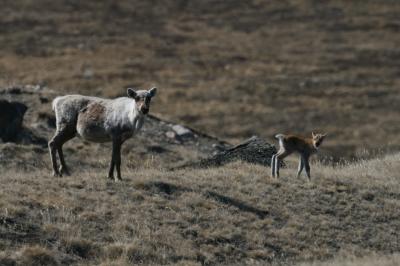

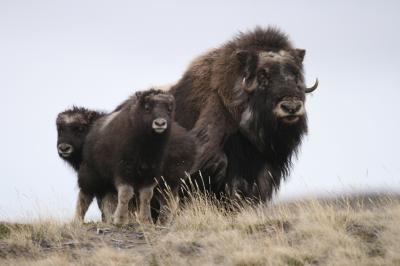
"The Arctic as we know it may soon be a thing of the past," says Eric Post, associate professor of biology at Penn State University. Post leads a large, international team that carried out ecosystem-wide studies of the biological response to Arctic warming during the fourth International Polar Year, which ended in 2008. The team's results will be reported on 11 September 2009 in the journal Science. The team's research documents a wide range of responses by plants, birds, animals, insects, and humans to the warming trend. The scientists found that the increase in mean annual surface temperature in the Arctic over the last 150 years has had dramatic effects. In the last 20 to 30 years, for example, the seasonal minimal sea ice coverage has declined by a staggering 45,000 square kilometers per year. Similarly, the extent of terrestrial snow cover has declined steadily, with earlier melting and breaking up and an earlier start to the growing season. "Species on land and at sea are suffering adverse consequences of human behavior at latitudes thousands of miles away," declares Post. "It seems no matter where you look -- on the ground, in the air, or in the water -- we're seeing signs of rapid change."
The study led by Post shows that many iconic Arctic species that are dependent upon the stability and persistence of sea ice are faring especially badly. Loss of polar ice habitat is causing a rapid decline in the numbers of ivory gull, Pacific walrus, ringed seal, hooded seal, narwhal, and polar bear. The researchers found that Polar bears and ringed seals, both of which give birth in lairs or caves under the snow, lose many newborn pups when the lairs collapse in unusually early spring rains. These species may be headed for extinction.
The research also reveals that species once confined to more southerly ranges now are moving northward. Among the most visible invaders are red foxes, which are displacing Arctic foxes from territories once too cold for red foxes. Some of the less showy invaders that the scientists found also are moving northward include the winter moth, which defoliates mountain birch forests, and species of Low Arctic trees and shrubs, which affect the dynamics of trace-gas exchange. The presence of more shrubs and trees promotes deeper snow accumulation, increasing soil temperatures during the winter, and more microbial activity in the soil, which in turn makes the habitats more suitable for shrubs. Increasing the shrub cover may lengthen the period during the plant growing season when the tundra acts as a carbon-dioxide sink. Countering this change, the research reveals, are musk oxen and reindeer, which browse on shrubs, limiting their carbon-soaking capacity and northward expansion to the High Arctic. Grazing, trampling, and defecation by these herbivores promote the growth and spread of grasses, which further attract geese. The geese in turn influence the productivity of lakes, where they rest and graze. The research indicates that complex aquatic and marine food webs like these are extremely vulnerable to alteration due to changes in temperature, precipitation, and nutrient load from the land.
The paper by Post's research team shows that the effects of Arctic warming have been dramatic so far, especially since the warming amounts to only about 1-degree Celsius over the last 150 years. Post said it is difficult to predict what will happen with the anticipated 6-degree warming over the next century.
"The results of our studies so far reveal widespread changes, but also a surprising heterogeneity in biological responses to warming," comments Post. For example, the study shows that wild reindeer on the Norwegian archipelago of Svalbard actually have benefited from melting of snow during winter, and perhaps also from the earlier seasonal loss of snow cover. With less snow cover and a longer growing season, these nonmigratory reindeer have taken advantage of the increased plant abundance, with the result that reindeer populations and their ability to reproduce are up, while mortality is down.
In contrast, migratory caribou in Low Arctic Greenland and elsewhere are declining in numbers, the study found. The caribou have not been able to adjust their calving season to keep it synchronized with changes in plant growth. Thus, the research shows, the time when the females need the most food no longer matches the time of maximum food availability, so fewer calves survive. The research suggests that hotter summers may result in more insects and parasites to prey on the caribou, which in turn may reduce the annual caribou harvest by local indigenous peoples. "Inuit hunters at my study site in Greenland have all but given up on hunting caribou there. What will be the next component to disappear from their traditional lifestyle, a lifestyle that has worked for thousands of years?" wonders Post.
Many questions remain unanswered as scientists wrestle with forecasting future events and developing plans to conserve the fragile Arctic ecosystems. Because there are relatively few species in the Arctic, ecosystems in this region may be more vulnerable to changes in its climate. "There is little functional redundancy among species in Arctic ecosystems," explains Post. "Therefore, relatively small shifts in species ranges or abundances may cause fundamental changes in a unique ecosystem that also is important for tourism and traditional cultures."
Why do some parts of the ecosystem appear to be unaffected by rising temperatures, while others seem to be heading for collapse? For example, despite heavy harvest and changing environmental conditions, sockeye salmon production in Bristol Bay, Alaska, has remained relatively stable or even increased over the last century. Though hundreds of salmon populations are scattered throughout a range of habitats, the system somehow has compensated for these serious demands.
It has long been assumed that the most important biological activities in the Arctic occur during the growing season, but the work highlighted by Post's team suggests otherwise. One natural winter warming episode in the sub-Arctic led to vegetation damage so extensive that plant productivity in the following summer was reduced by 26 percent over an area of at least 1400 square kilometers. In a different area, there was an unexpectedly large release of methane into the atmosphere at the onset of autumn soil freezing. Though working in the Arctic in the autumn and winter poses logistical problems, the findings indicate the importance of monitoring the dynamics of the ecosystem year-round.
"People have thought of the Arctic as a relatively simple ecosystem that is easily understood, but in fact it is very complex," explains Post. "Not all populations within a given species respond similarly to warming because physical and landscape features that interact with climate can vary tremendously from site to site. I think response heterogeneity is going to be one of the keys to species persistence, community integrity, and ecosystem function as the Arctic continues to warm."
Post's team calls for establishing a pan-Arctic series of integrated baseline studies to monitor the physical drivers of climate change and the biological responses to them over the long term. "We've seen a great deal of emphasis recently on the melting of Arctic ice," Post says. "The broad, rapid, and in some cases devastating changes documented in this paper remind us of why it's important to give consideration to the consequences of rising temperatures."
Source: Penn State
Articles on the same topic
- The change in Arctic nature foreshadows the global environment of the futureFri, 11 Sep 2009, 13:24:58 UTC
- Scientists seek new emphases in Arctic climate change researchThu, 10 Sep 2009, 21:08:02 UTC
- IPY follow-up requires year-round research on Arctic and global warmingThu, 10 Sep 2009, 18:30:06 UTC
Other sources
- Experts Urge Year-round Research On Arctic And Global Warmingfrom Science DailyFri, 11 Sep 2009, 3:21:49 UTC
- Dramatic Biological Responses To Global Warming In The Arcticfrom Science DailyFri, 11 Sep 2009, 3:21:14 UTC
- Warming study: Arctic ‘severely perturbed’from MSNBC: ScienceThu, 10 Sep 2009, 21:35:42 UTC
- IPY follow-up requires year-round research on Arctic and global warmingfrom Science BlogThu, 10 Sep 2009, 21:14:11 UTC
- Dramatic biological responses to global warming in the Arcticfrom PhysorgThu, 10 Sep 2009, 19:28:30 UTC
- The Changing Arctic: How Animals Respond to Climate Changefrom Live ScienceThu, 10 Sep 2009, 18:35:10 UTC
- Study: The arctic is rapidly changingfrom UPIThu, 10 Sep 2009, 18:14:09 UTC
- Arctic Warming Overtakes 2,000 Years of Natural Coolingfrom Newswise - ScinewsTue, 8 Sep 2009, 18:21:15 UTC