


'First economical process' for making biodiesel fuel from algae
Related images
(click to enlarge)
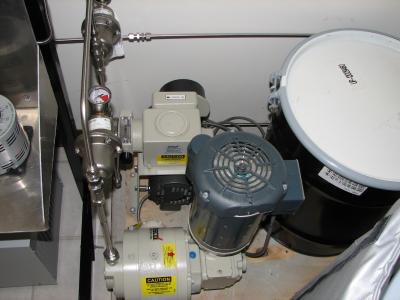
Chemists reported development of what they termed the first economical, eco-friendly process to convert algae oil into biodiesel fuel — a discovery they predict could one day lead to U.S. independence from petroleum as a fuel. One of the problems with current methods for producing biodiesel from algae oil is the processing cost, and the New York researchers say their innovative process is at least 40 percent cheaper than that of others now being used. Supply will not be a problem: There is a limitless amount of algae growing in oceans, lakes, and rivers, throughout the world.
Another benefit from the "continuously flowing fixed-bed" method to create algae biodiesel, they add, is that there is no wastewater produced to cause pollution.
"This is the first economical way to produce biodiesel from algae oil," according to lead researcher Ben Wen, Ph.D., vice president of United Environment and Energy LLC, Horseheads, N.Y. "It costs much less than conventional processes because you would need a much smaller factory, there are no water disposal costs, and the process is considerably faster."
A key advantage of this new process, he says, is that it uses a proprietary solid catalyst developed at his company instead of liquid catalysts used by other scientists today. First, the solid catalyst can be used over and over. Second, it allows the continuously flowing production of biodiesel, compared to the method using a liquid catalyst. That process is slower because workers need to take at least a half hour after producing each batch to create more biodiesel. They need to purify the biodiesel by neutralizing the base catalyst by adding acid. No such action is needed to treat the solid catalyst, Wen explains.
He estimates algae has an "oil-per-acre production rate 100-300 times the amount of soybeans, and offers the highest yield feedstock for biodiesel and the most promising source for mass biodiesel production to replace transportation fuel in the United States." He says that his firm is now conducting a pilot program for the process with a production capacity of nearly 1 million gallons of algae biodiesel per year. Depending on the size of the machinery and the plant, he said it is possible that a company could produce up to 50 million gallons of algae biodiesel annually.
Wen also says that the solid catalyst continuous flow method can be adapted to mobile units so that smaller companies wouldn't have to construct plants and the military could use the process in the field.
Source: American Chemical Society
Other sources
- Economical, eco-friendly process for making biodiesel fuel from algaefrom PhysorgThu, 26 Mar 2009, 11:49:05 UTC
- "First Economical Process" for Making Biodiesel Fuel from Algaefrom Newswise - ScinewsThu, 26 Mar 2009, 0:21:14 UTC