


Childhood anxiety disorders can and should be treated, according to UT Southwestern national expert
Related images
(click to enlarge)
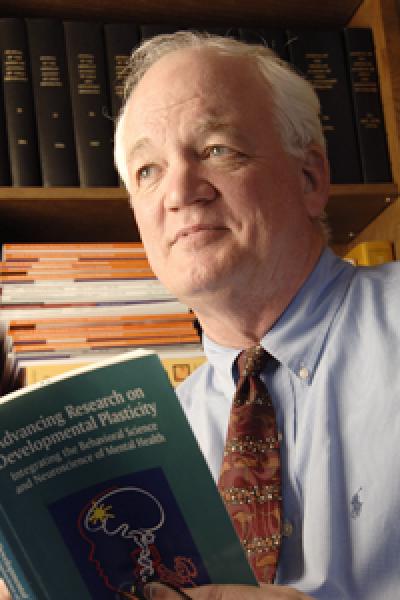
Anxiety disorders in children and adolescents should be recognized and treated to prevent educational underachievement and adult substance abuse, anxiety disorders and depression, says a nationally recognized child psychiatrist from UT Southwestern Medical Center. In an editorial appearing in the Dec. 25 issue of New England Journal of Medicine, Dr. Graham Emslie, professor of psychiatry and pediatrics at UT Southwestern, urges awareness that children need to be treated for anxiety disorders and recommends that related empirical evidence be integrated into treatment guidelines.
"Anxiety disorders may cause children to avoid social situations and age-appropriate developmental milestones," said Dr. Emslie. "Further, the avoidance cycle can lead to less opportunity to develop social skills necessary for success later in life. Treatment would help children learn healthy coping skills."
Up to 20 percent of children and adolescents are affected by persistent and excessive worry that can manifest as generalized anxiety disorder, separation anxiety disorder and social phobia. Research has shown that failure to identify these disorders early leads to educational underachievement and increased rates of anxiety disorders, depression and substance abuse later in life.
Only with the adaptation of the Diagnostic and Statistical Manual of Mental Disorders 4th edition did the mental health community recognize that adult anxiety disorders have origins in childhood, wrote Dr. Emslie, the first psychiatrist to demonstrate that antidepressants are effective in depressed children and adolescents.
Anxiety disorders in children are frequently unrecognized because they may only report physical aches and may be unable to verbalize "worry" or "fear," said Dr. Emslie, chief of child and adolescent psychiatry at Children's Medical Center Dallas.
The editorial accompanies a study in the same issue of the journal by senior author John Walkup of Johns Hopkins Medical Institute. The pivotal research, which was conducted at seven medical institutions across the U.S., was the first study to directly compare medication treatment, cognitive behavioral therapy that examines thinking patterns in order to modify behavior, and the combination of both treatments in children and teens with anxiety disorders. The results showed that antidepressant medications and cognitive behavioral therapy were equally effective treatments for anxiety and that the combination of both treatments was most effective.
Dr. Emslie said he hopes future studies will build on this work to determine what type to treatment is best for individual patients.
"Partial treatment is not adequate," he said. "If children aren't treated to the point of complete remission, they are likely to relapse. It's imperative that we help children overcome their anxiety disorders for their own lifetime good."
Source: UT Southwestern Medical Center
Other sources
- Childhood anxiety disorders can and should be treatedfrom PhysorgWed, 24 Dec 2008, 23:14:32 UTC