


Unique fossil discovery shows Antarctic was once much warmer
Related images
(click to enlarge)
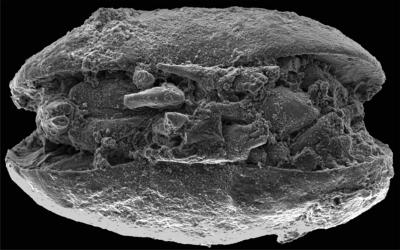
A new fossil discovery- the first of its kind from the whole of the Antarctic continent- provides scientists with new evidence to support the theory that the polar region was once much warmer. The discovery by an international team of scientists is published today (**Embargoed until 00.01 BST Wednesday 23 July**) in Proceedings of the Royal Society B. It involved researchers from the University of Leicester, North Dakota State University, the British Geological Survey, Queen Mary University of London, and Boston University.
The team made a new fossil discovery in the Dry Valleys of the East Antarctic region. The fossils (ostracods) come from an ancient lake - 14 million years old - and are exceptionally well preserved, with all of their soft anatomy in 3-dimensions.
Dr Mark Williams from the Department of Geology at the University of Leicester said: "This is a rare occurrence in the fossil record - but is the first of its kind from the whole of the Antarctic continent.
"Notwithstanding the significance of the fossil preservation, the presence of lake ostracods at this latitude, 77 degrees south, is also of great note. Present conditions in this Antarctic region show mean annual temperatures of minus 25 degrees C. These are impossible conditions to sustain a lake fauna with ostracods."
"The fossils therefore show that there has been a substantial and very intense cooling of the Antarctic climate after this time interval that is important for tracking the development of the Antarctic icesheet – a key factor in understanding the effects of global warming.
"The fossil ostracods of the Dry Valleys signal a high latitude lake viable for animal colonisation that indicates a dramatic change in the climate of this region, from tundra conditions 14 million years ago, to the intensely cold continental interior climate experienced today."
The researchers point out that there is no evidence to suggest the fossil discovery points to a once widespread Antarctic lake ostracod fauna: "It is most likely their introduction was by chance, perhaps via birds as dispersal of ostracod eggs attached to the feathers or feet of migratory birds is an important influence on modern ostracod distribution."
The ostracods were discovered by Richard Thommasson, an undergraduate student, during screening of the sediment in Prof. Allan Ashworth's lab at North Dakota State University.
Source: University of Leicester
Other sources
- Unique fossil discovery shows Antarctic was once much warmerfrom Biology News NetSat, 26 Jul 2008, 23:56:05 UTC
- Tiny Fossils Reveal Warm Antarctic Pastfrom National GeographicFri, 25 Jul 2008, 17:14:05 UTC
- Unique fossil discovery shows Antarctic was once much warmerfrom PhysorgWed, 23 Jul 2008, 13:35:08 UTC
- Unique Fossil Discovery Shows Antarctic Was Once Much Warmerfrom Science DailyWed, 23 Jul 2008, 1:35:13 UTC
- Fossil Suggests Antarctica Much Warmer in Pastfrom Live ScienceTue, 22 Jul 2008, 23:42:06 UTC