


X-rays power discoveries at Chicago's Field Museum
Related images
(click to enlarge)
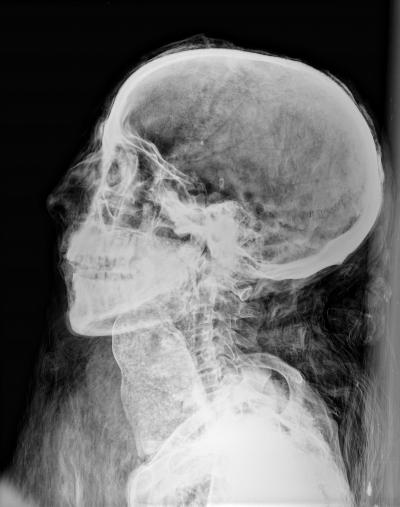


Digital medical imaging and information technology from Carestream Health, Inc., is playing a key role in helping The Field Museum of Chicago discover and analyze secrets hidden within its world-class collections. Carestream Health has donated a computed radiography (CR) system that enables The Field Museum—for the first time—to capture, archive and share digital x-ray images from more than one million priceless specimens and artifacts in its Anthropology collection. The Field Museum is also using a picture archiving and communications system (PACS) from Carestream Health for the management, viewing and storage of the growing collection of digital images managed by the museum’s staff.
“The availability of this advanced x-ray system will have tremendous benefits not only for research, but also for management of our collections,” said Robert D. Martin, the A. Watson Armour III Curator of Biological Anthropology at The Field Museum. “Non-invasive visualization of specimens and artifacts can yield valuable new scientific information, and it can also provide crucial indications for proper conservation of specimens in our care.”
Images of an ancient Egyptian mummy demonstrate how digital images are superior to film images. Recently captured digital images have revealed a previously unknown erosion of the parietal lobes in the mummy’s skull. This could indicate the presence of parasites, anemia or malnourishment shortly before death. Similarly, curators will be looking for signs of spinal cord deterioration in other specimens, which could be a sign of tuberculosis.
“The nice part about this new digital equipment is that it is very fast and the images are so sharp,” said J.P. Brown, Conservator, Anthropology, The Field Museum. “This system allows us to do in a day what it used to take a week to accomplish.”
The CR system has already led to new discoveries, Brown added. A digital image of the pelvis of the same Egyptian mummy revealed that the person was most likely a woman between 30 and 40 years old. Additionally, an image of a Peruvian “false head” (falsa cabeza) revealed the surprising presence of shells inside the artifact. Anthropology Collections Manager Chris Philip identified shells inside the stuffing of the mask. The clarity of the image allowed Invertebrates Collections Manager Jochen Gerber to specify two complete shells as Mesodesma donacium, an edible marine clam inhabiting the waters off the west coast of South America. This may help to answer the tantalizing question of why this “false head” was packed with shells. The shells appear to be a deliberate addition to the filling of the mask, possibly a food offering, but their meaning is unclear since no other specimens with added shells are known.
In another example, an image of the head of a statue of a king from a Sassanian palace in Iraq revealed metal pieces that had been added to the statue as part of a restoration that was probably performed in the late 1940s. Prior to capturing this image, Field Museum conservators had planned to treat the statue with water to soak out salts that had accumulated in it over the years while it was buried in the ground. If they had done so, the metal pieces would have rusted and the pressure from the rust would have caused the piece to break apart. Now—armed with new information—the conservators are developing a method to stabilize the artifact that does not involve immersing it in water.
For several decades, The Field Museum used x-ray film to capture images of its unique collections. “With the CR system, the museum’s staff is realizing the many benefits of digital imaging technology in its day-to-day operations,” said Laryssa Johnson, Marketing Director, Digital Capture Solutions, Carestream Health. “For example, this system—typically used by healthcare facilities worldwide to capture patient x-ray images—is now producing high-quality digital images of the museum’s priceless artifacts for use in ongoing research projects.”
Carestream Health’s CR system is ideal for use with organic objects such as mummies, leather goods and baskets, and can generate excellent images of denser museum pieces such as ceramics, stucco and beads. The company’s digital workstation—also on site—allows the museum to have one centralized image review platform with a powerful database that provides quick and easy access to studies and images.
“As one of the world’s leading educational institutions, The Field Museum’s collection-based research and exhibits help create greater public understanding and appreciation of the world in which we live,” said Diana Nole, President, Digital Capture Solutions, Carestream Health. “Our digital technology is helping the museum’s talented staff further unlock the many mysteries contained within its priceless collections.”
Carestream Health has a special business unit—its Non-Destructive Testing Solutions group—that develops and delivers non-destructive testing systems for a wide variety of industries and businesses around the world. The company has dedicated resources available to the museum/art world for implementing innovative digital systems for capturing images of architectural objects, mummies, dinosaurs, sculptures, paintings, historical artifacts and much more.
Source: Field Museum
Other sources
- Computed Radiography System Helps Uncover Secrets From The Pastfrom Science DailyFri, 9 May 2008, 15:21:06 UTC
- X-rays power discoveries at Chicago's Field Museumfrom PhysorgWed, 7 May 2008, 14:56:18 UTC